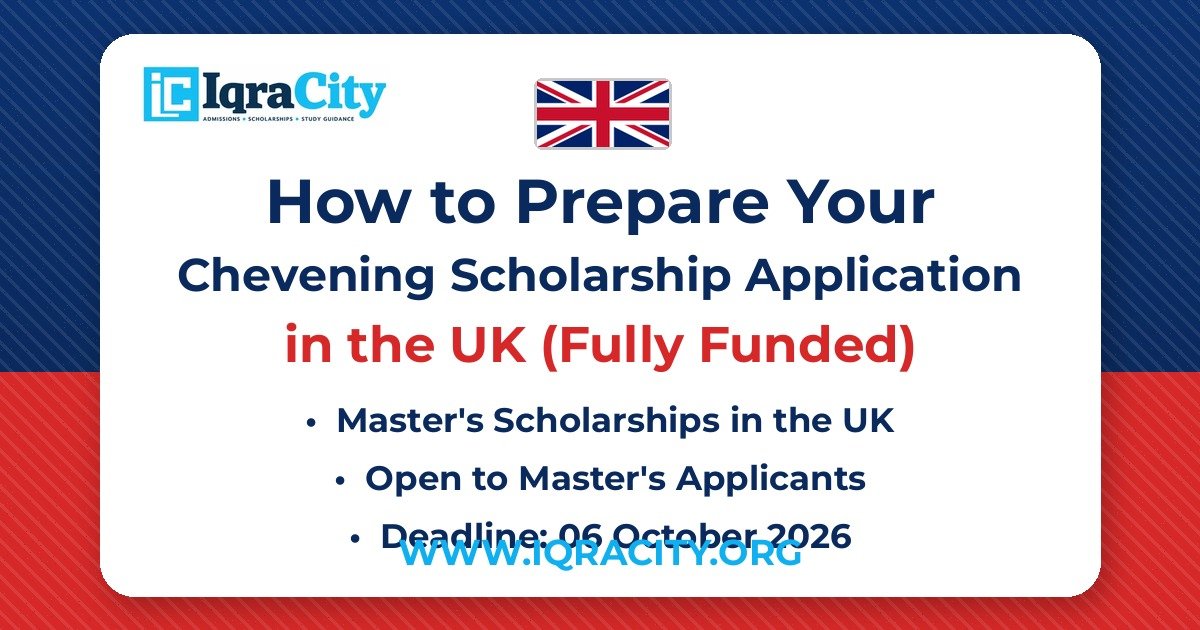
In short: Chevening is the UK's flagship fully funded master's scholarship for future leaders — and it rewards clarity of purpose more than perfect grades. This guide covers the full journey: crafting the four essays, understanding the interview format at the British embassy, the questions you'll actually face, and how successful scholars prepare.
Understanding What Chevening Really Wants
Before writing a word, internalize this: Chevening doesn't fund the smartest applicants — it funds future leaders, influencers, and decision-makers who will create positive change in their home countries. Every part of your application should answer one underlying question: *why will investing in this person pay off for their country and for the UK's relationship with it?*
The scholarship covers full tuition, monthly stipend, travel to and from the UK, and various allowances for a one-year master's at any UK university. It's run by the UK Foreign, Commonwealth and Development Office (FCDO), and selection happens in your home country.
The Four Essays: Your Foundation
The written application centers on four essays (each with a word limit — respect it exactly):
1. Leadership and influencing
Don't list titles — tell a story. Pick one specific example where you led, influenced, or drove change, and use the STAR method: Situation, Task, Action, Result. Quantify impact wherever possible ("trained 30 teachers," "increased enrollment 40%"). The interview *will* probe this example deeply, so it must be real and detailed.
2. Networking
Chevening is obsessed with networks — the global alumni community is central to its mission. Show that you already build and use relationships strategically: professional associations, collaborations, mentorships, community organizing. Then explain how you'll engage with the Chevening network specifically — name alumni in your field if you can find them.
3. Study in the UK
This is where most applicants are weakest. "The UK has world-class universities" is not an answer. For each of your three course choices, show specific knowledge: particular modules, professors whose research aligns with yours, unique program features, industry links. Explain why *these* courses — not just any UK master's — are the precise tools your career plan needs.
4. Career plan
Your post-study plan is the single most scrutinized element. It must be specific, realistic, and connected to your country's needs: the role you'll take, the organization, the problem you'll address, the timeline. "I want to make an impact" is vague and scores poorly. "I will return as a policy analyst at [organization], working on [specific reform], using [specific skills from the course]" is what wins.
Golden rule: the four essays must tell one coherent story. Leadership example → networks you've built → UK study that fills your skill gap → career plan that deploys it. Inconsistency between essays is a red flag.
Getting Shortlisted: What Happens After You Apply
Applications are screened against eligibility (typically two years of work experience — which can include volunteering, internships, and part-time work — plus an undergraduate degree and English requirements). Strong applications are shortlisted for interview at the British Embassy or High Commission in your country, usually a few months after the application deadline.
The Interview: Format and What to Expect
- Where: British Embassy/High Commission (or partner venue); in-person or virtual depending on location.
- Panel: typically 2–4 people, often including Chevening alumni and FCDO representatives.
- Length: around 30 minutes.
- Style: professional but conversational. They've read your application thoroughly — expect deep follow-ups, not surface questions.
- Structure: questions flow from your four essays, plus probes on your knowledge and motivation. All candidates in a country face the same core questions.
Questions You'll Almost Certainly Face
"Tell us about yourself." A 60–90 second narrative, not a CV recitation. Open with what drives you, anchor it in one key experience, bridge to why Chevening now.
"Walk us through your leadership example." They'll push past your essay: what obstacles did you face? What would you do differently? What did you learn? Rehearse the full story, including the messy parts — authenticity beats polish.
"Why these universities and courses?" Name modules, professors, research groups. Show you've done the homework. Vague answers here are fatal.
"What is your ten-year career plan?" Specific, consistent with your essay, credibly linked to your UK degree. They want a plausible trajectory, not grandiosity.
"How will you use the Chevening network?" Name specific alumni or network resources. Show you've researched the community, not just the funding.
"What will you do when you return home?" The critical question. Specific role, specific problem, specific timeline, aligned with your country's needs. This is where commitment to return is tested.
"What challenges do you anticipate in the UK?" Honest, mature answer — cultural adjustment, weather, academic intensity — plus how you'll handle them. Shows self-awareness.
"Tell us about a time you failed." Pick a real failure, own it fully, and focus on what it taught you. Defensive or fake answers ("I'm a perfectionist") backfire.
How Successful Scholars Prepare
- Re-read your essays until you own them. Every claim will be probed. Prepare 2–3 minutes of additional detail for each essay's key example.
- Research your field's current issues. Prepare informed views on 3–5 current challenges in your sector and your country's development context.
- Know UK–your-country relations. FCDO interviewers care about the bilateral relationship. Basic literacy here impresses.
- Practice out loud. Record yourself answering. Awkward phrasing and rambling only reveal themselves when spoken.
- Prepare questions for the panel. Thoughtful questions (about the alumni community, FCDO priorities in your sector) signal genuine engagement.
- Logistics: confirm the venue, arrive early, dress professionally even for virtual interviews, test your tech beforehand.
- Be conversational, not rehearsed. The best interviews feel like discussions about your life and goals. Memorized monologues sound hollow — know your material, then talk naturally.
After the Interview
Decisions typically follow within a few months. If selected, you'll go through reference checks, an unconditional university offer requirement, and pre-departure preparations. If not selected — reapply. Many Chevening scholars succeeded on their second or third attempt, and each cycle sharpens your story.
Frequently Asked Questions
How much work experience do I need for Chevening?
Two years, but it counts broadly — full-time and part-time employment, volunteering, and paid or unpaid internships all qualify. What matters is what you did with the time, not just the job title.
Can I choose any UK university and course?
Yes — any UK university, any one-year taught master's (MBA programs have some restrictions). You list three course choices in order of preference, and you must secure an unconditional offer from one.
Is the interview in English?
Yes. It's also, implicitly, a test of your communication skills — clarity, structure, and confidence matter as much as content.
What if I don't know the answer to a question?
Say so honestly and think aloud. Interviewers respect "I haven't faced that exact situation, but here's how I'd approach it" far more than bluffing. They're testing judgment, not trivia.
Do I have to return to my home country after Chevening?
Yes — you're expected to return for at least two years. Your career plan should make this commitment concrete and credible, not grudging. Chevening invests in people who'll create change at home.