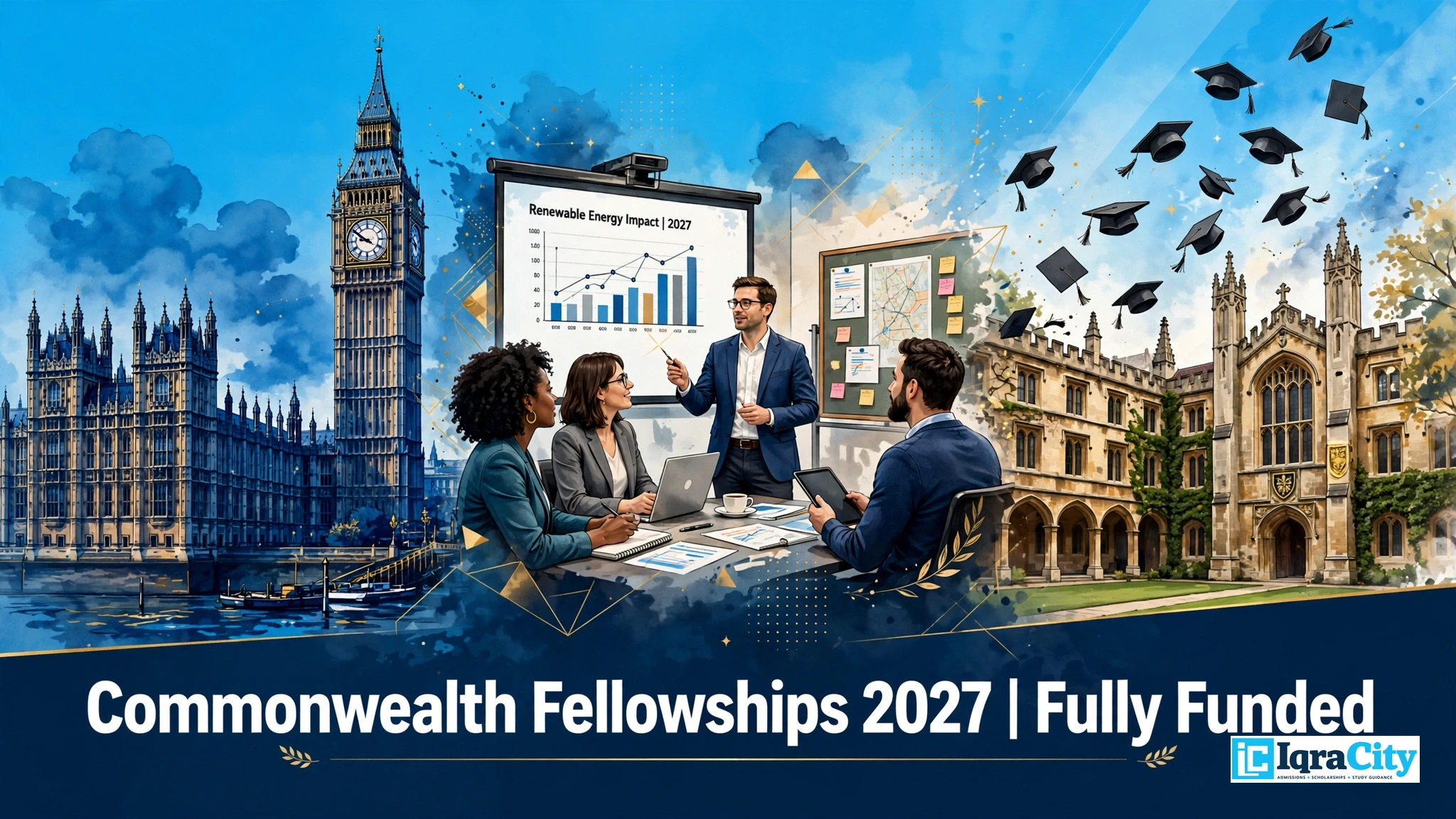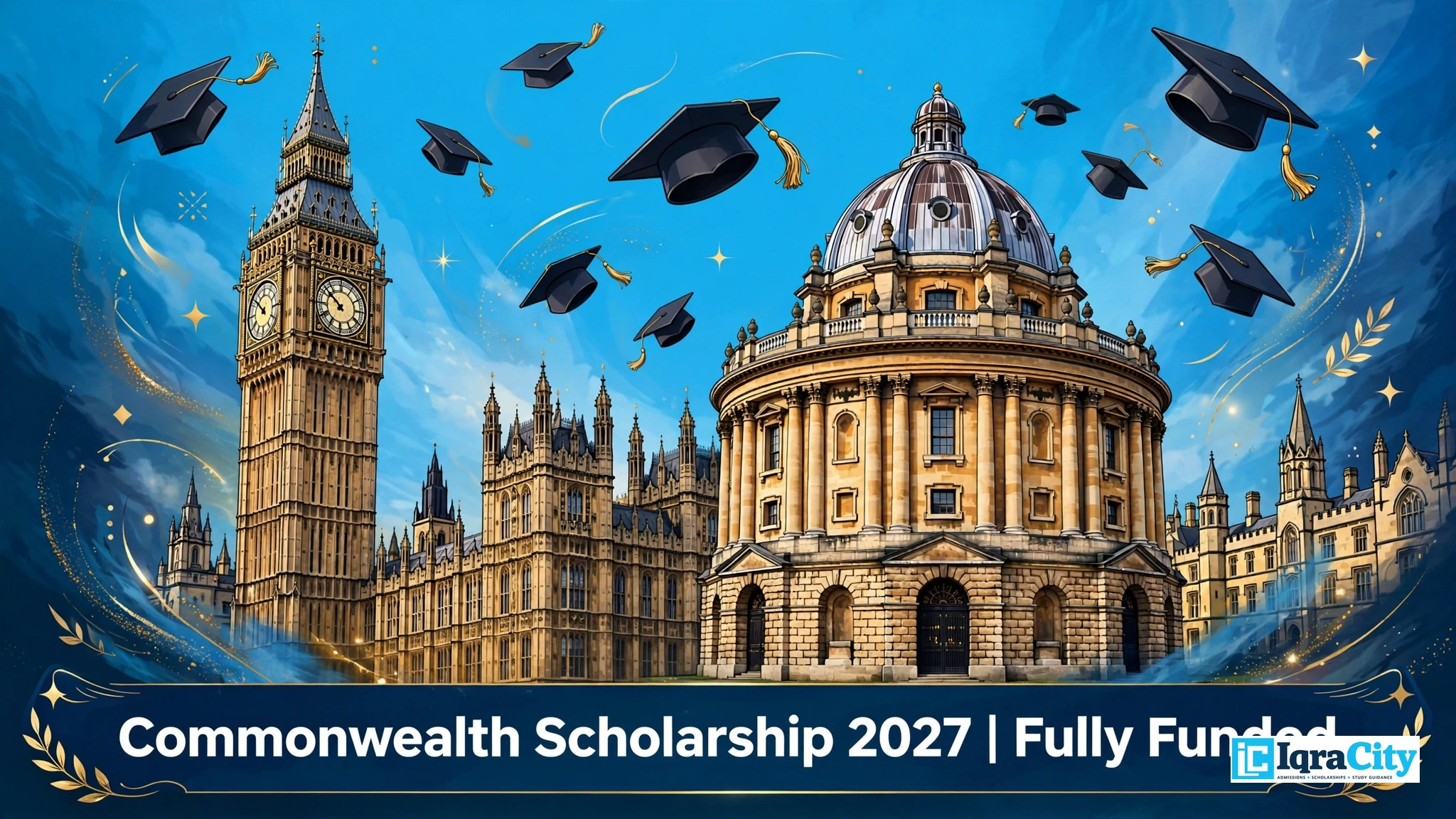
Few scholarships carry as much weight — and as much history — as the Commonwealth Scholarship. Funded by the UK Foreign, Commonwealth & Development Office, it has been sending brilliant students from across the Commonwealth to British universities for more than six decades, all on a fully funded ticket. If you come from one of the eligible low or middle-income Commonwealth countries and couldn't otherwise afford to study in the UK, this is the scholarship designed exactly for you. Applications for the 2027-28 round are open right now, but the window is short — they close on 20 October 2026.
In short: The Commonwealth Scholarship 2027-28 is a fully funded UK government scholarship for Master's and PhD study, aimed at talented candidates from eligible Commonwealth countries who can't afford UK study otherwise. The CSC deadline is 20 October 2026 at 16:00 BST, and you must also apply through your country's nominating agency.
Quick Overview
- Host Country: United Kingdom
- Host Institution: Any approved UK university with a CSC part-funding agreement
- Degree Level: Taught Master's (one year) and PhD
- Program Duration: 1 year (Master's) / up to 3 years (PhD)
- Funding Type: Fully funded (government scholarship)
- Deadline: 20 October 2026, 16:00 BST
Benefits of the Commonwealth Scholarship 2027-28
The CSC is clear about what "fully funded" means here — and it's generous. Each scholarship provides:
- Full tuition coverage — approved tuition fees are covered by agreement between the CSC and the university, so you are not liable for any part of the tuition fee.
- Monthly stipend — £1,712 per month, or £2,000 per month if you're at a university in the London metropolitan area (rates at current levels).
- Return airfare — approved airfare from your home country to the UK and back at the end of the award.
- Study travel grant — towards the cost of study-related travel within the UK or overseas.
- Child allowance — if you're widowed, divorced, or a single parent with children living with you in the UK: £622 per month for the first child, and £154 per month for the second and third child under 16.
- Disability support — a full assessment of needs and eligibility for additional financial support if you share a disability with the CSC.
Eligibility Criteria for the Commonwealth Scholarship 2027-28
This scholarship is deliberately targeted, so read these carefully before you start:
- Nationality: Be a citizen of, or have been granted refugee status by, an eligible Commonwealth country — or be a British Protected Person.
- Residency: Be permanently resident in an eligible Commonwealth country.
- Academic standard: By September 2027, hold a first degree of at least upper second-class (2:1) honours standard, or a lower second-class degree plus a relevant postgraduate qualification (usually a Master's).
- Financial need: Be unable to afford to study in the UK without this scholarship.
- Availability: Be available to start academic studies in the UK by the start of the UK academic year in September 2027.
- No second Master's: The CSC has a preference for applicants who have completed their undergraduate degrees and would not normally fund a second Master's. If you're applying for one, you must justify why. If you've already studied at Master's level at a UK institution, or previously held a Commonwealth Scholarship at Master's level, you can't apply.
- PhD applicants (extra): Must be from least developed countries and vulnerable states in the Commonwealth (such as Bangladesh, Nigeria, Pakistan, Uganda, Zambia and others on the CSC's list), and must not already be registered for a PhD or an MPhil leading to a PhD before September/October 2026.
There is no age limit. Disabled applicants who faced barriers that affected their grades may be considered through a contextualised nomination route via the Commonwealth Disabled People's Forum.
The eligible Master's countries include Bangladesh, Ghana, India, Kenya, Malaysia, Malawi, Nigeria, Pakistan, Rwanda, Sierra Leone, South Africa, Sri Lanka, Tanzania, Uganda, Zambia and many more — check the full list on the CSC site.
How to Apply for the Commonwealth Scholarship 2027-28
1. Check your eligibility against the CSC criteria and your country's eligible-country list for your strand (Master's or PhD). 2. Find your nominator. This is the step people miss. The CSC does not accept direct applications — you must also apply to a nominator, usually your country's national nominating agency (the main route), or one of the selected NGOs/charitable bodies the CSC invites to participate. 3. Register on CSC Central, the CSC's official application system (it uses two-factor authentication, so have a smartphone or second email ready). 4. Prepare your answers offline first. The CSC itself recommends writing your responses in a document and pasting them in once finalised — the system can time out and refreshing loses unsaved work. 5. List your university choices. Name up to three UK universities and courses in order of preference with your reasons — the CSC won't change these after selection, so choose carefully, and apply to those universities for admission in parallel. 6. Upload all supporting documents and your references in PDF format before the deadline. 7. Submit before 16:00 BST on 20 October 2026. Late applications are not accepted, and the system gets very busy in the final days. 8. Watch your email. Nominators put forward their candidates to the CSC by December 2026, and applicants can expect to hear outcomes by July 2027 — check every folder including spam.
Required Documents
- Proof of citizenship or refugee status in an eligible Commonwealth country — a copy of a valid passport (or national ID card) showing photograph, date of birth, and country of citizenship.
- Full transcripts for all higher education qualifications, including to-date transcripts for any course currently being studied, with certified translations if not in English. Missing or incomplete transcripts make you ineligible.
- References from at least two individuals, in PDF format, signed and on institutional letterhead (or an email clearly showing the sender's details).
- For PhD applicants: a supporting statement from a proposed supervisor in the UK from at least one of the institutions named on the application form.
- If your to-date transcripts aren't available, include an explanation of why.
Commonwealth Scholarship 2027-28 Deadline
The closing date for applications to the CSC is 16:00 BST on Tuesday 20 October 2026, for study in the UK beginning in September/October 2027. Note that your nominator may set its own earlier closing date, so check with your national nominating agency first and don't assume the CSC date applies to them. Missing the deadline means you're out for this round — the CSC explicitly says it cannot accept late applications, so submit well before the final day.
Frequently Asked Questions
Is the Commonwealth Scholarship really fully funded?
Yes. Tuition fees are paid in full through the CSC's agreement with the university, you receive a monthly living stipend (£1,712, or £2,000 in London), a return flight, and a study travel grant. That said, the stipend is meant to cover your personal maintenance — you'll still need to budget sensibly, and the family allowances are only a contribution towards costs if children come with you.
Do I need IELTS to apply?
No. The CSC does not require any candidates to take an IELTS (English language) test. Your chosen UK university may have its own language requirements for admission, but the scholarship itself doesn't ask for IELTS.
Can I apply directly to the CSC?
No — and this is the most common mistake. The CSC does not accept direct applications for the Master's or PhD strands. You must apply through a nominator: your national nominating agency (the main route) or one of the invited NGOs/charitable bodies. You apply to the CSC via CSC Central *and* to your nominator.
Is there an age limit?
There is no age limit for CSC applications. The CSC encourages applications from a diverse range of applicants. Just confirm with your employer any leave-entitlement rules if you're currently employed.
Does the Commonwealth Scholarship cover MBA degrees?
No. The CSC funds one-year taught Master's programmes only and explicitly does not fund MBA degrees. Make sure your chosen course fits before applying.
Can I stay in the UK to work after the scholarship?
All Commonwealth Scholars commit to returning home after their scholarship to contribute to their home country's development — switching to a graduate or other visa to remain in the UK is not permitted. (The only exception the CSC will consider is extending leave to move from Master's to PhD study, under strict conditions.)
What if I already have a Master's degree?
The CSC would not normally fund a second Master's degree. If you still want to apply, you must provide a clear justification for why the second Master's is necessary — and if your previous Master's was at a UK institution, or you previously held a Commonwealth Scholarship at Master's level, you're not eligible.
When will I hear the result?
Applicants can expect to hear the outcome by July 2027, by email. Monitor all your email folders including junk and spam, and respond within the specified time if contacted — a scholarship offer can be withdrawn if you don't respond in time.
Final Words
The Commonwealth Scholarship is one of the most respected — and genuinely life-changing — awards in the world. It's also brutally competitive, so treat the application with the seriousness it deserves: get your nominator route sorted early, write a compelling development impact statement, and don't leave submission to the last day. If the deadline passes you by, the programme runs every year, so start preparing now for the next round.