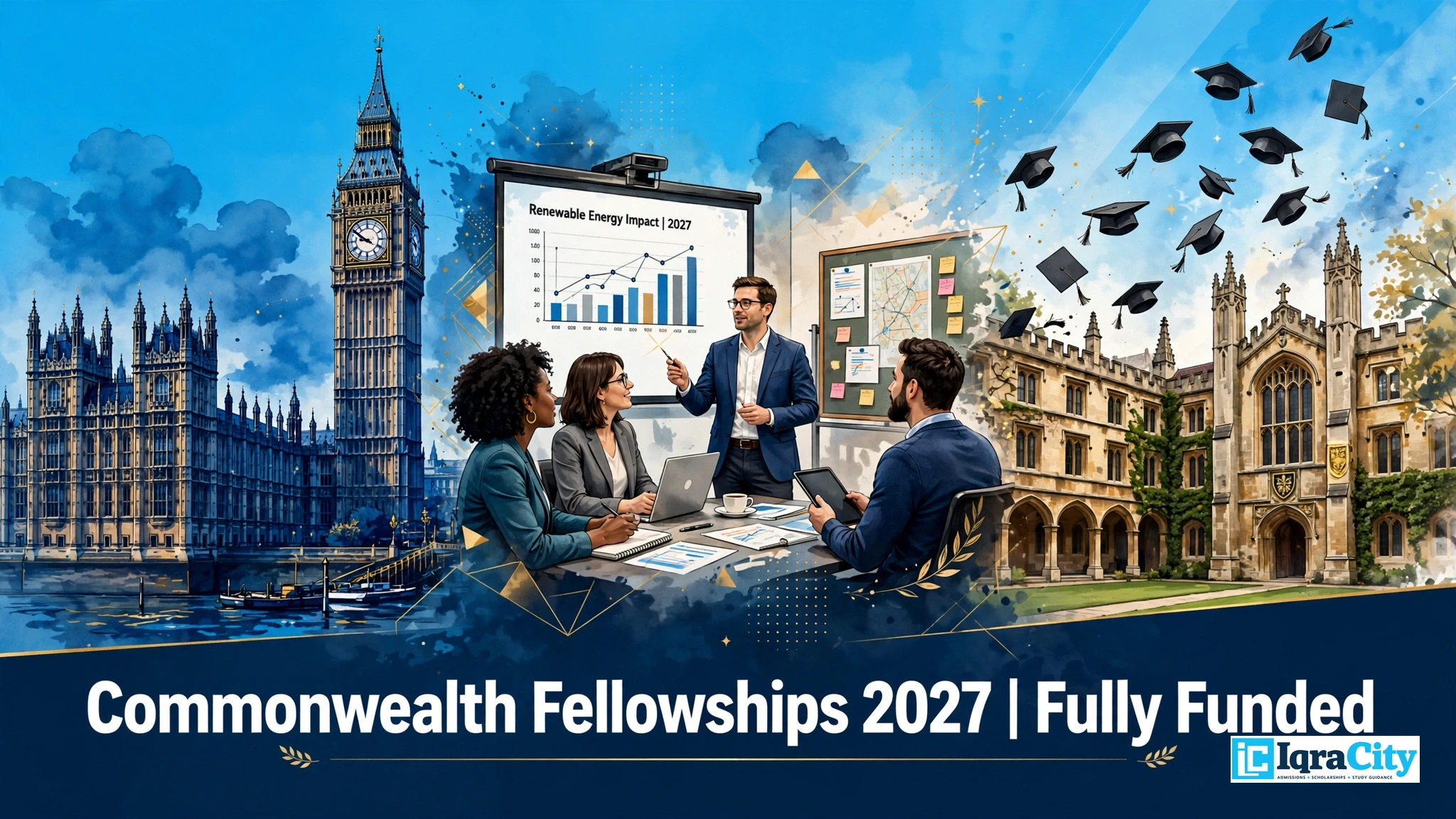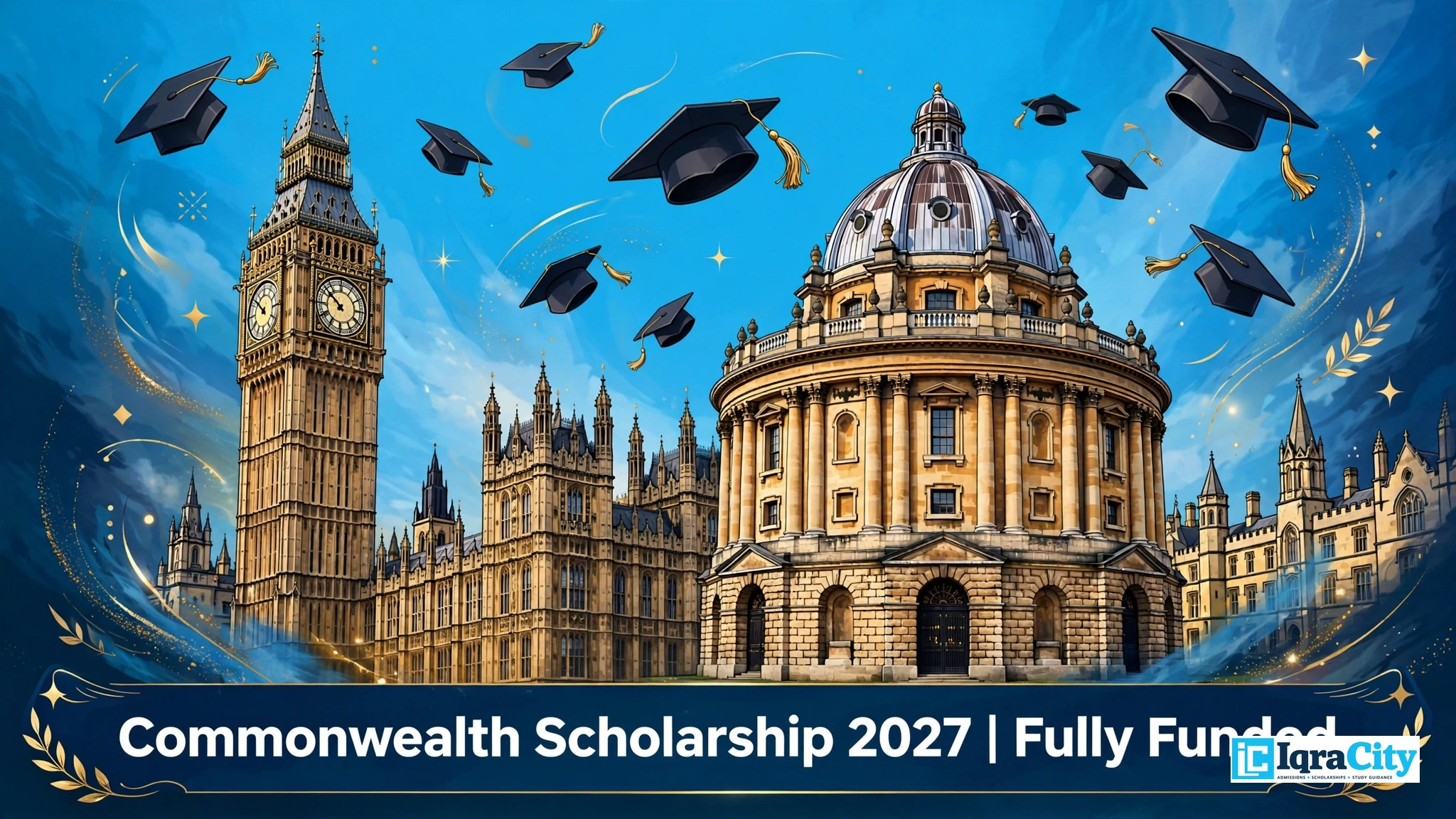
Here's a scholarship that genuinely changes lives: a fully funded one-year Master's degree at a UK university, with your tuition, flights, and living costs all covered. The Commonwealth Master's Scholarships are run by the Commonwealth Scholarship Commission (CSC) and funded by the UK Foreign, Commonwealth & Development Office (FCDO) — one of the most established government scholarship schemes in the world. If you're a talented graduate from an eligible low or middle-income Commonwealth country and couldn't otherwise afford to study in the UK, this is built for you. Just know this upfront: it's competitive, and the application asks for real thought, not just paperwork. Applications are open now, but your national nominating agency may set an earlier deadline — so don't wait.
In short: The Commonwealth Master's Scholarship 2027-28 funds a full-time taught Master's at any approved UK university for graduates from 42 eligible Commonwealth countries. It covers tuition, return airfare, and a monthly stipend of £1,712 (£2,000 in London). Applications close at 16:00 BST on 20 October 2026, and you must apply through both CSC Central and your country's nominating agency.
Quick Overview
- Host Country: United Kingdom
- Host Institution: Any approved UK university (with a CSC part-funding agreement)
- Degree Level: Master's (full-time taught, one year)
- Program Duration: 12 months
- Funding Type: Fully funded — tuition, return airfare, monthly stipend, study travel grant
- Deadline: 20 October 2026, 16:00 BST (applications opened 8 September 2026)
Benefits of the Commonwealth Master's Scholarships 2027
This is a proper fully funded award — not a partial discount dressed up as one. Here's what every scholar gets:
- Full tuition coverage — approved tuition fees are covered by agreement between the CSC and your UK university, so you're not liable for any part of the fee.
- Return airfare — approved economy airfare from your home country to the UK and back at the end of your award. (Fares for dependants aren't reimbursed, and neither are journeys made before your award is confirmed.)
- Monthly living stipend — £1,712 per month, or £2,000 per month if you're studying at a university in the London metropolitan area (rates quoted at current levels).
- Study travel grant — a grant towards the cost of study-related travel within the UK or overseas.
- Child allowance for single parents — if you're widowed, divorced, or a single parent, you get £622 per month for the first child and £154 per month for the second and third child under 16, provided your children live with you at the same UK address.
- Disability support — if you share that you have a disability, the CSC offers a full assessment of your needs and eligibility for additional financial support.
- No application fee — the CSC never charges to apply. If anyone asks you for money to process a Commonwealth application, it's a scam.
Eligibility Criteria for the Commonwealth Master's Scholarships 2027
Be honest with yourself on this list — the CSC is strict, and missing documentation by the deadline means automatic ineligibility.
- Eligible nationality — you must be a citizen of, or have been granted refugee status by, an eligible Commonwealth country, or be a British Protected Person.
- Permanent residence — you must be permanently resident in an eligible Commonwealth country.
- Academic standing — by September 2027, you must hold a first degree of at least upper second-class (2:1) honours standard, or a lower second-class (2:2) degree plus a relevant postgraduate qualification (usually a Master's degree).
- Available to start — you must be able to start your studies in the UK by the start of the UK academic year in September 2027.
- Financial need — you must be unable to afford to study in the UK without this scholarship.
- No second Master's without justification — the CSC would not normally fund a second Master's degree; if you're applying for one, you must justify why. If you've already studied at Master's level at a UK institution, or previously held a Commonwealth Scholarship at Master's level, you're not eligible.
- Course type matters — the CSC funds one-year taught Master's programmes only. MBA degrees are not funded, and study must be full-time.
- No age limit — there isn't one. If you're older, just confirm any employer leave restrictions with your workplace.
- No IELTS required by the CSC — the Commission doesn't ask for an English test, though your chosen university's admission process might.
Eligible countries: Bangladesh, Belize, Botswana, Dominica, Eswatini, Fiji, Gabon, The Gambia, Ghana, Grenada, Guyana, India, Jamaica, Kenya, Kiribati, Lesotho, Malawi, Malaysia, Maldives, Mauritius, Montserrat, Mozambique, Namibia, Nauru, Nigeria, Pakistan, Papua New Guinea, Rwanda, Saint Helena, Saint Lucia, Saint Vincent and The Grenadines, Samoa, Sierra Leone, Solomon Islands, South Africa, Sri Lanka, Tanzania, Togo, Tonga, Tuvalu, Uganda, Vanuatu, and Zambia.
How to Apply for the Commonwealth Master's Scholarships 2027
This is the part most applicants get wrong. You cannot just apply to the CSC directly — there are two parallel tracks, and you need both.
1. Check your nominator first. Applications go through a nominator: usually your country's national nominating agency (the main route), or a selected NGO/charitable body. The CSC does not accept direct applications. Nominators run their own selection process, may add their own eligibility criteria, and — crucially — may set their own closing date that's earlier than the CSC's. 2. Shortlist up to three universities and courses. The CSC advises listing three UK universities and courses in order of preference, with reasons. The CSC makes the final placement decision and won't change your choices after selection, so a second and third choice is strongly recommended — without one, your scholarship may not proceed if your first choice can't place you. 3. Apply for university admission in advance. You need to apply to your preferred universities separately and early. Many UK courses have strict admission deadlines; if you're selected for the scholarship but haven't been accepted for a course, the award may not go ahead. 4. Register on CSC Central. The CSC's online application system is CSC Central. It uses two-factor authentication, so you'll need a smartphone or a second email account. Prepare your answers offline first using the template application form and guidance document the CSC provides — then paste them in. 5. Line up your referees early. You'll need references from at least two individuals (you'll list three referees on the form, and one should be your current employer if you have one). References must be signed and on institutional letterhead — or an email clearly showing the sender's details — and uploaded as PDFs by the deadline. 6. Write your Development Impact statement. This is the heart of the application, in four parts: how your study connects to development issues at global, national, and local levels and to your chosen CSC development theme; how you'll apply your new skills after the scholarship; what will change in development terms (outcomes, timeframe, beneficiaries); and how that impact can be measured. You'll also write your plan of study, award objectives, career plans, and a personal statement. 7. Upload everything and submit before 16:00 BST on 20 October 2026. Use the save function as you go (refreshing the browser loses unsaved data), and remember you can't edit anything after submitting. Apply early — the system gets very busy near the deadline, and late applications aren't accepted for any reason. 8. Wait for nominations and results. Nominators put forward candidates to the CSC by December 2026. A nomination is no guarantee of selection. You can expect to hear the outcome by July 2027 — check every folder of your email, including spam.
Required Documents
Only documents uploaded through CSC Central count. Anything sent by email or after the deadline is ignored, and incomplete applications are automatically ineligible.
- Copy of a valid passport or national ID card showing your photograph, date of birth, and country of citizenship.
- Full transcripts for all higher education qualifications, including to-date transcripts for any course you're currently studying, with certified translations if they aren't in English. If any pages are missing, the application is ineligible — so check twice.
- References from at least two individuals, in PDF format, signed, and on institutional letterhead or an email clearly showing the sender's details.
Commonwealth Master's Scholarships 2027 Deadline
The CSC deadline is 16:00 BST on Tuesday, 20 October 2026 — for study in the UK beginning September/October 2027. Miss it and there's no appeal; the CSC explicitly says it can't accept late applications if you run out of time. But here's the catch that sinks applicants every year: your nominator's deadline may be weeks earlier. National nominating agencies submit their candidates to the CSC by December 2026, which means their own cut-off dates fall well before 20 October. Find your agency's date now and plan backwards from it, not from the CSC's.
Frequently Asked Questions
Is the Commonwealth Master's Scholarship really fully funded?
Yes, honestly. Tuition is fully covered, your return flights are paid for, and you get a monthly stipend of £1,712 (£2,000 in London) plus a study travel grant. The limits are worth knowing: dependants' airfares aren't covered, and the child allowance (£622/month for the first child, £154 for the second and third under 16) applies only if you're widowed, divorced, or a single parent. It's generous, but London prices being what they are, many scholars still budget carefully.
Can I apply directly to the CSC?
No. The CSC does not accept direct applications for this scholarship. You must apply through a nominator — your country's national nominating agency or a selected NGO/charitable body — and through CSC Central as well. Both applications are required; one without the other won't work.
Do I need IELTS or another English test?
The CSC itself doesn't require IELTS. But be careful: the universities you're applying to almost certainly have their own English language requirements for admission, and you need a university offer for the scholarship to proceed. Check your chosen universities' requirements separately.
Can I apply if I already have a Master's degree?
Probably, but with caveats. The CSC wouldn't normally fund a second Master's, so you'd need a strong justification for why this one is necessary. And if that existing Master's was studied at a UK institution, or you previously held a Commonwealth Scholarship at Master's level, you're simply not eligible. MBAs are never funded under this scheme.
Is there an age limit?
No, there's no age limit at all. The CSC explicitly encourages applications from a diverse range of applicants. The only practical consideration is leave entitlement from your employer if you're working.
Can I bring my family to the UK?
It's possible but honestly difficult. Family allowances are intended as a contribution only — the CSC says the true costs of maintaining a family in the UK are likely considerably higher, and you must be able to supplement them yourself. Child allowances exist for single parents, but spouses' and dependants' airfares are never reimbursed. Think it through financially before committing.
Can I stay in the UK after the scholarship ends?
No. All Commonwealth Scholars commit to returning home after their award to contribute to their country's development, and you'll sign an undertaking to return before your student visa expires. Switching to a graduate or other visa to remain in the UK is not permitted.
My undergraduate grade is a 2:2 and I don't have a Master's. Am I eligible?
Not on that basis — a 2:2 alone isn't enough. You'd need a relevant postgraduate qualification (usually a Master's) completed by September 2027 to meet the requirement. The one exception: disabled applicants who can show they've overcome barriers in their education journey may be considered for a contextualised nomination through the Commonwealth Disabled People's Forum.
How competitive is it, really?
Very. Thousands apply across 42 countries for a limited number of awards, and selection weighs academic merit, the quality of your research/study plan, and the development impact your work could have back home. The good news: the criteria are published and merit-based, so a genuinely strong, well-thought-out application from anyone eligible has a real chance.
What happens if the online system crashes on deadline day?
Don't find out. The CSC warns that the system is extremely busy in the final days and says plainly that it can't accept late applications if you run out of time. Submit at least a few days early, save your progress constantly, and use the system back buttons rather than your browser's.
Final Words
The Commonwealth Master's Scholarship is one of the few schemes that asks not just "are you smart?" but "what will you do for your country with this?" If you can answer that question well — and get your nominator's application in before their own deadline — it's one of the best-funded Master's routes anywhere. Start early, prepare your answers offline, and don't leave it to the last week.