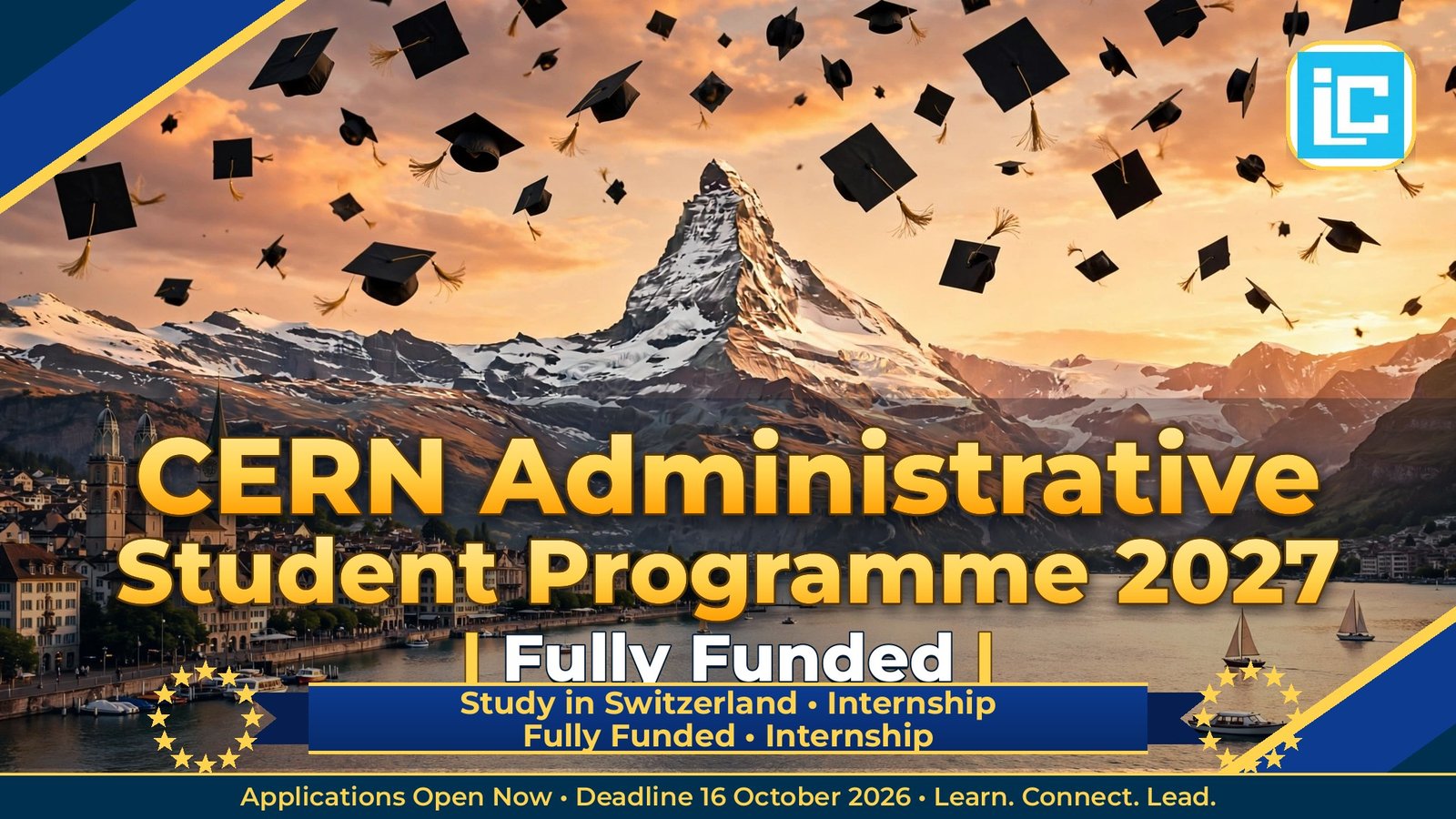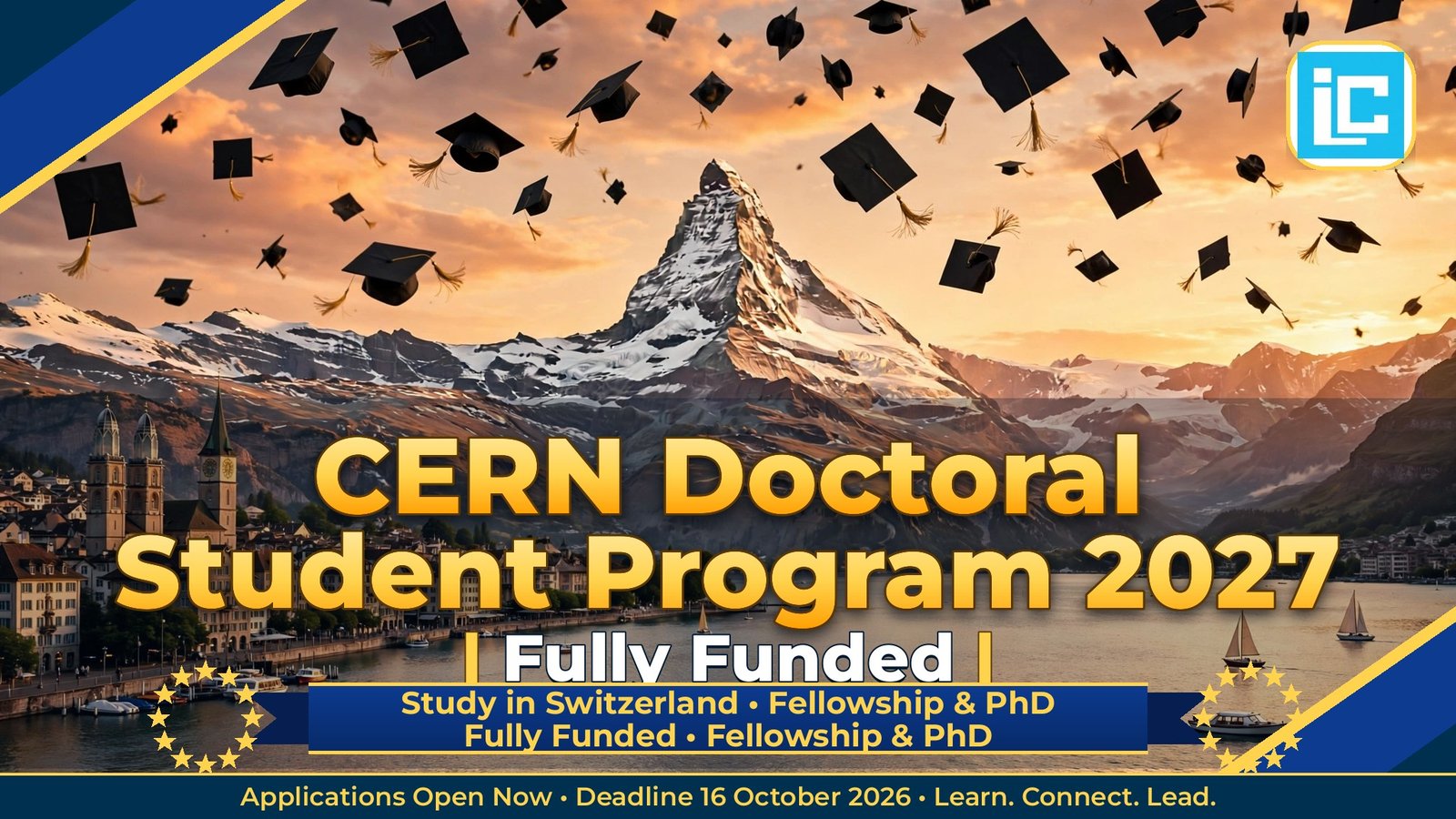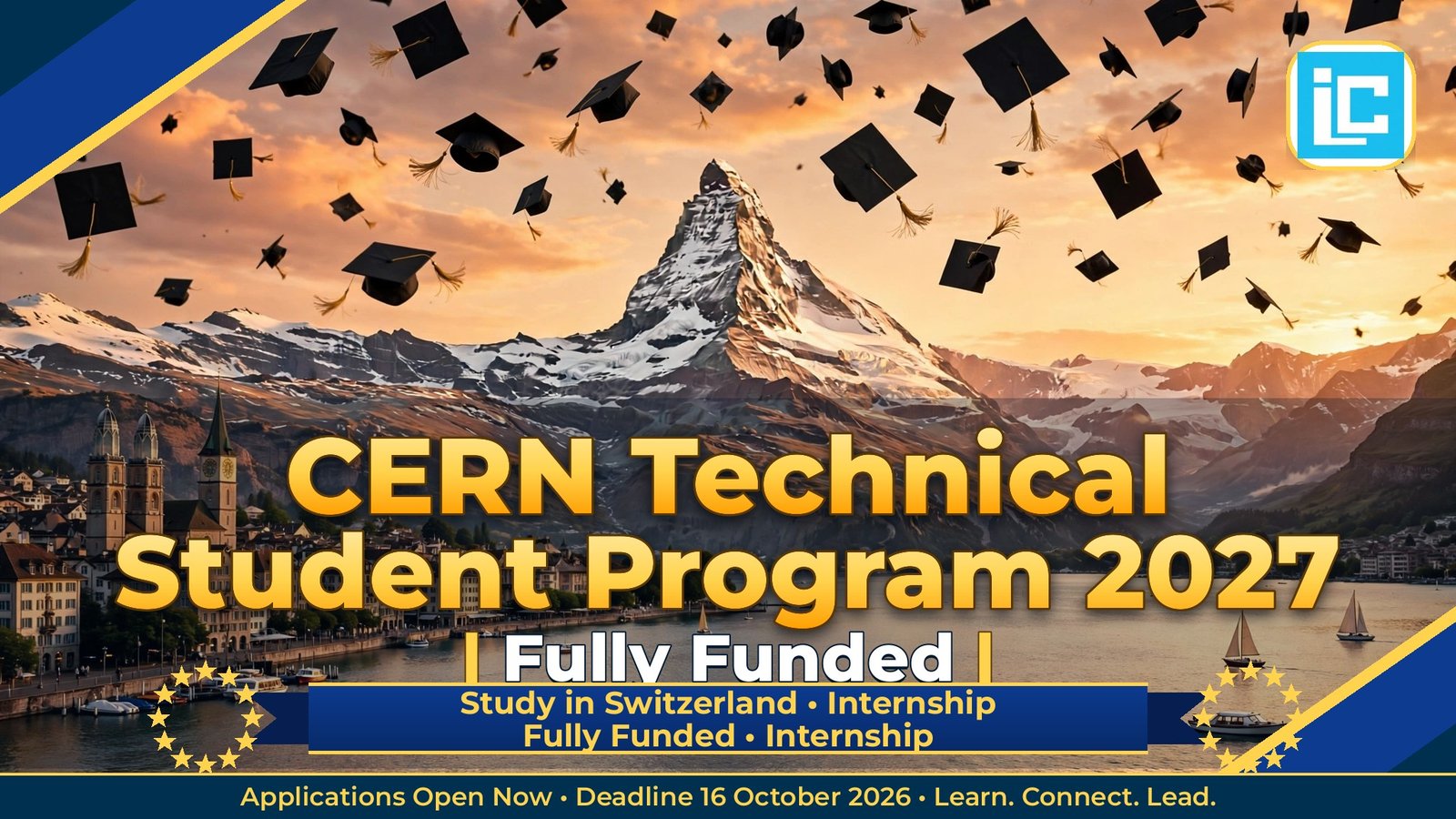
Here's something most students don't realise: CERN — yes, the Large Hadron Collider people — pays university students to work on real engineering and computing projects in Geneva. The Technical Student Program (officially the "Technical Studentship") is a paid, professional placement lasting 4 to 12 months, with a tax-free monthly allowance of CHF 3,486.
This isn't a scholarship in the classic sense. You won't sit in lectures. You'll work alongside engineers, technicians, and scientists on genuine CERN projects — in applied physics, robotics, IT, mechanical and electrical engineering, and more. For a STEM student, there's hardly a stronger line on a CV.
In short: The CERN Technical Student Program 2027-1 is a paid studentship for Bachelor's and Master's students from CERN Member and Associate Member States, offering CHF 3,486/month tax-free plus health insurance and paid leave in Geneva. Applications for the current vacancies close 16 October 2026, 23:59 Geneva time.
● Applications Open
Quick Overview
- Host Country: Switzerland
- Host Institution: CERN (European Organization for Nuclear Research), Geneva
- Degree Level: Bachelor's and Master's students (currently enrolled)
- Program Duration: 4 to 12 months (ideal start date: 1 April 2027)
- Funding Type: Fully Funded (paid studentship: CHF 3,486/month tax-free + benefits)
- Deadline: 16 October 2026, 23:59 Geneva time (each vacancy has its own closing date — check yours)
Benefits of the CERN Technical Student Program 2027
CERN's package is remarkably generous for a student placement — and it's designed so money is never the reason someone turns the offer down.
- CHF 3,486 monthly allowance, tax-free — that's the standout number. It's a net payment, paid every month for the duration of your studentship.
- Comprehensive health insurance — you're covered by CERN's own health insurance scheme. The contribution is automatically deducted from your allowance, so there's nothing extra to arrange or pay.
- 30 days of paid leave per year — plus CERN's two-week annual closure period. You're treated like a professional, because you are one.
- Travel expenses to Geneva — depending on your individual circumstances, CERN covers your travel to Geneva when you join.
- Family supplement — depending on your individual circumstances, a supplement can be added to your subsistence allowance.
- Real project experience — the intangible benefit that outweighs everything: hands-on work on cutting-edge projects in computing infrastructure, robotics, sensors, instrumentation, or construction, under close supervision of experienced professionals.
- An international community — you'll join a cohort of students from dozens of countries, with CERN's full social and cultural life in Geneva.
There are no application fees, no hidden costs — CERN covers the package above by design.
Eligibility Criteria for the CERN Technical Student Program 2027
The rules are precise, and CERN states them plainly. Check every one before you invest time in an application.
- Nationality of a CERN Member State or Associate Member State — this is the hard gate. CERN lists eligible nationalities on its official page, so check yours first.
- Currently limited Associate Member nationalities — as of the 2027-1 call, CERN cannot consider applications from Pakistani, Lithuanian, Latvian, Cypriot, and Croatian nationals, because the recruitment ceiling defined under Article II.5 of the Associate Membership Agreement has been reached. This can change, so check the official vacancy page.
- At least 18 months of university study completed — you must have completed at least 3 semesters in your field at the time of selection.
- No PhD students or holders — the Technical Studentship is strictly for Bachelor's and Master's students. CERN runs a separate Doctoral Student Programme for PhD candidates.
- Remain enrolled full-time — you must stay registered as a full-time student at your university throughout the studentship.
- Good knowledge of English or French — CERN's working languages. No IELTS certificate is specifically required; what matters is that you can actually work in one of them.
- University support for practical training — ideally, your university requires or encourages a practical training period, so the studentship connects to your studies.
- On-site availability — the studentship is fully on-site in Geneva, 40 hours per week. Remote participation isn't an option.
How to Apply for the CERN Technical Student Program 2027
There is no single generic application form. Each technical field has its own vacancy, and you apply to the one matching your studies.
1. Pick your vacancy. The 2027-1 round covers fields including Applied Physics, Material & Surface Science, General & Civil Engineering, IT, Mathematics & Robotics, Electrical & Electronics Engineering, and Mechanical Engineering. Read the specific vacancy carefully — each has its own closing date. 2. Check your eligibility against that vacancy. Confirm your nationality status, your completed semesters, and your enrolment — then move fast if you qualify. 3. Prepare your application documents. Your CV (in English or French) is the core document. Add your academic transcript and an academic reference letter if you have strong ones — both are optional but they help. 4. Apply on CERN's official recruitment portal. Click "I'm interested" on the vacancy page and complete the application before the deadline: 16 October 2026, 23:59 Geneva time for the current round. 5. Selection and start. If selected, CERN will contact you with next steps. The ideal start date for this round is 1 April 2027, with contract lengths of 4 to 12 months.
Tip: because each field is a separate vacancy, apply only to the one closest to your studies — a focused, relevant application beats a scattergun approach.
Required Documents
CERN keeps the paperwork refreshingly light. From the official vacancy:
- CV (in English or French)
- Any document you consider relevant to your application
- Academic reference letter (optional)
- Academic transcript (optional)
That's the complete official list. The "optional" items aren't really optional if you want to stand out — a strong transcript and a reference from a professor who knows your work will do more for you than anything else.
CERN Technical Student Program 2027 Deadline
The current 2027-1 vacancies close on 16 October 2026 at 23:59 Geneva time. But read this carefully: each technical vacancy has its own closing date, so the vacancy in your field might close at a different time. Open the exact vacancy you want and note its individual deadline.
Miss the deadline and you're out of the 2027-1 round entirely — CERN doesn't run late-application exceptions. The programme runs multiple rounds per year, so a missed round usually means waiting for the next vacancy cycle rather than waiting a full year.
Frequently Asked Questions
Is the CERN Technical Student Program really fully funded?
Yes. It's a paid studentship: CHF 3,486 per month tax-free, health insurance, paid leave, travel expenses to Geneva depending on circumstances, and a possible family supplement. There are no tuition fees because it's a work placement, not a degree.
I'm from Pakistan / Lithuania / Latvia / Cyprus / Croatia. Can I apply?
Not in the current round. CERN has stated it cannot consider applications from these Associate Member State nationalities because the recruitment ceiling has been reached. Check the official vacancy page for updates — ceilings can change between rounds.
Is IELTS required for the CERN studentship?
No IELTS certificate is specifically required. You need a good working knowledge of English or French, demonstrated through your CV, application, and any interviews — not a test score.
Can PhD students apply?
No. PhD students and PhD holders are explicitly excluded from the Technical Studentship. CERN has a separate Doctoral Student Programme designed for PhD candidates — apply to that instead.
Do I need to stay enrolled at my university?
Yes. You must remain a full-time enrolled student for the entire duration of your studentship. CERN may ask for proof of enrolment.
How long does the studentship last?
Between 4 and 12 months, full-time and fully on-site in Geneva. The ideal start date for the 2027-1 round is 1 April 2027.
Is there an application fee?
No. CERN does not charge any application fee for the Technical Studentship. Be wary of anyone asking for money in connection with a CERN application.
Can I apply to more than one field?
Each vacancy is a separate application. Apply to the field that genuinely matches your studies — CERN values relevance and focus over volume.
What's the difference between the Technical and Administrative Student Programmes?
The Technical Studentship is for STEM fields (engineering, physics, IT, robotics) and involves hands-on technical project work. The Administrative Student Programme covers fields like finance, HR, law, and communications. Apply to the one matching your degree.
Will this help my career after graduation?
Enormously. CERN alumni work across global tech, research, and engineering. The combination of a world-famous institution, real project responsibility, and an international network is one of the strongest early-career signals in STEM.
Final Words
The CERN Technical Student Program is that rare thing: a placement that pays you well, teaches you intensely, and puts one of the most respected names in science on your CV — all before you graduate. The October deadline is close, so check your vacancy, polish your CV, and apply while the round is open. Geneva is waiting.