Belgium does not make much noise about its scholarships, which is exactly why the ARES International Training Scholarships are such a well-kept secret. Run by the Academy of Research and Higher Education (ARES) — the federation of higher education institutions of the Wallonia-Brussels Federation — this fully funded program brings working professionals from 32 partner countries to Belgium for specialized bachelor's, master's, and continuing training programs built around real development challenges.
One thing to understand upfront: this is not a scholarship for fresh graduates hunting for any master's degree in Europe. ARES targets graduates who are already working and want specialized training they can take back to their own countries.
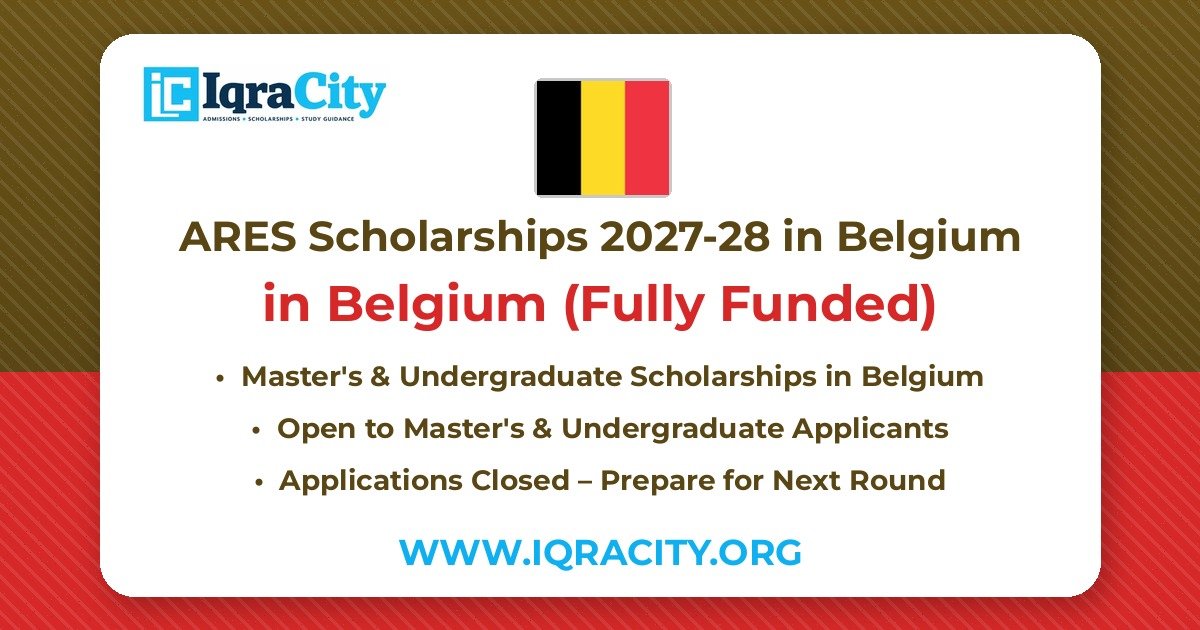
In short: The ARES Scholarships 2027-28 offered fully funded specialized bachelor's, master's, and continuing training programs in Belgium for working professionals from 32 partner countries. Applications closed on 18 September 2026, 12:00 noon Belgian time — this guide gives you the complete picture so you can prepare for the next annual call.
● Applications Closed
Quick Overview
- Host Country: Belgium
- Host Institution: Higher education institutions of the Wallonia-Brussels Federation (including UCLouvain, ULB, ULiège, and UNamur)
- Degree Level: Specialized Bachelor's, Specialized Master's, Continuing Training
- Program Duration: Up to 12 months (bachelor's and master's); up to 6 months (continuing training)
- Funding Type: Fully funded
- Deadline: 18 September 2026, 12:00 noon Belgian time (UTC+1) — closed
Benefits of the ARES Scholarships
The ARES scholarship is genuinely comprehensive. Rather than a tuition waiver that leaves you scrambling for living costs, it covers nearly every major expense of an international study period:
- Full tuition coverage — tuition fees are covered for the specialized bachelor's and specialized master's programs.
- International travel — round-trip travel expenses between your home country and Belgium are included.
- Subsistence allowance — ARES provides a living allowance to cover your day-to-day costs for the duration of the program.
- Insurance costs — health and insurance coverage are taken care of under the scholarship.
- Visa-related expenses — exceptional costs related to visa applications are covered for the bachelor's and master's programs.
- Indirect mission expenses — for continuing training programs, ARES provides indirect mission expenses.
- No application fee — applying costs nothing, and there is no IELTS-style language test requirement from ARES itself (though your chosen program's language must be mastered).
Eligibility Criteria for the ARES Scholarships
ARES eligibility is narrower and more specific than most scholarship programs. Read these carefully before investing time in an application:
- Eligible country residence and work — you must be a permanent resident and worker in one of the 32 eligible partner countries. Palestinian nationals are an exception to the residence requirement.
- The 32 eligible countries — Benin, Burkina Faso, Burundi, Cameroon, Ethiopia, Guinea, Ivory Coast, Kenya, Madagascar, Mali, Morocco, Mozambique, Niger, DR Congo, Rwanda, Senegal, South Africa, Tanzania, Tunisia, Uganda, Zimbabwe; Bolivia, Cuba, Ecuador, Haiti, Peru; Cambodia, Indonesia, Nepal, Philippines, Vietnam; and Palestine.
- Recent graduate degree — your most recent graduate degree must have been earned no more than 20 years before the program starts. This period is extended by one year per childbirth and/or adoption.
- Two years of professional experience — at least two years of relevant professional experience after your last degree, acquired in an eligible country, are required.
- Program admission requirements — you must meet the specific academic prerequisites of the specialized bachelor's, master's, or continuing training program you select.
- Language — a good written and spoken command of the language in which the chosen program is taught (French for most programs, English for some). Basic French helps with daily life in Belgium.
- One program only — you may apply for just one training program in each call.
ARES normally requires you to live and work in an eligible country — a Pakistani national living and working in the Gulf, for example, would not qualify, while one living and working in Nepal or Cameroon would.
How to Apply for the ARES Scholarships
Applications run entirely online through ARES's GIRAF platform. For the 2027-2028 call, the process was:
1. Request a GIRAF account — if you do not already have one, submit an account creation request on the GIRAF portal. This is the single biggest timing trap: for the 2027-28 call, new accounts had to be requested by 4 September 2026 at 16:00 Belgian time, and approval can take from a few hours to several days. 2. Log in and open the call — inside GIRAF, go to "Competitive Calls" and click "Application – International Training 2027–2028." 3. Download and read the applicant's guide — ARES publishes a detailed guide for each call. Read it before touching the form. 4. Pick your one program — choose a single specialized bachelor's, specialized master's, or continuing training program from the call's official list, and check its admission requirements. 5. Complete the form in multiple sessions — use "Save as Draft" to work on the application over several sittings. A saved draft can be reopened under "My Tasks" in "Competitive Calls." 6. Upload all documents — certified copies of diplomas and transcripts, recommendation letters, proof of occupation, passport, and any pre-project your program requires. 7. Submit before the deadline — click "Submit my application." Once submitted, the application can no longer be modified. Your submitted form appears under "My Submitted Applications."
Required Documents
- Two recommendation letters — academic and/or professional referees.
- Certified copies of original diplomas — for all qualifications held.
- Certified copies of original transcripts — for all years of study.
- Proof of occupation for the last five years — evidence of your employment history.
- Certificate of nationality or a copy of the passport.
- Pre-project — required by some programs; check the admission requirements of your chosen program.
ARES Scholarships Deadline
The application deadline for the 2027-2028 call was 18 September 2026 at 12:00 noon Belgian time (UTC+1), submitted through the GIRAF platform. A separate earlier deadline applied for GIRAF account creation: 4 September 2026 at 16:00 Belgian time. Selection takes place between October 2026 and May 2027, and all applicants are notified by June 2027, with programs starting in September 2027.
If you missed this round, do not be discouraged. ARES runs this call annually: the 2028-2029 call is expected to open around early August 2027 with a similar mid-September deadline. Your smartest move now is to request your GIRAF account early, line up your certified documents and recommendation letters, and start identifying which program fits your professional background.
Programs Offered Under the 2027-2028 Call
To give you a concrete sense of what ARES funds, the 2027-2028 call listed one specialized bachelor's program, eight specialized master's programs, and one continuing training course:
- Specialized Bachelor's: Digital Integrated Supply Chain.
- Specialized Master's: Human Rights; Integrated Health Risk Management; International and Development Economics; Microfinance; Public Health Policy and Systems (analysis and evaluation of policies, programs, and international health systems); Food Chain Safety Management; Preventive Conservation and Collection Management; Risk and Disaster Management in the Anthropocene.
- Continuing Training: Certificate in Cybersecurity Operations and Risk Governance.
Frequently Asked Questions
Is the ARES Scholarship really fully funded?
Yes. It covers international travel, a subsistence allowance, insurance, tuition fees for the bachelor's and master's programs, exceptional visa-related costs, and indirect mission expenses for continuing training. There is no application fee.
Has the 2027-2028 deadline passed?
Yes. Applications closed on 18 September 2026 at 12:00 noon Belgian time. The next call (2028-2029) is expected to open around August 2027. Use the time to get your GIRAF account, documents, and recommendation letters ready.
Can fresh graduates apply?
Honestly, this is not designed for them. ARES requires at least two years of relevant professional experience after your last degree, acquired in an eligible country. The program deliberately targets working professionals who can connect the training to development work back home.
Do I need IELTS or a language test?
ARES does not impose a universal language test. You need a good command of the language your chosen program is taught in — French for most, English for several — as judged through the application itself. Check each program's admission requirements.
Can I apply for more than one program?
No. Only one training program per call. Choose the one that best matches your background and professional goals, because your application quality matters far more than volume.
Is Pakistan on the eligible country list?
No. The 32 eligible countries include Nepal, Cambodia, Indonesia, the Philippines, and Vietnam in Asia, but Pakistan is not among them. Also remember that residence and work in an eligible country are required — holding an eligible passport while living elsewhere is generally not enough.
What is GIRAF, and why does the account deadline matter?
GIRAF is ARES's online application platform. New accounts must be requested and validated by ARES before you can apply, and for the 2027-28 call that request had to be made by 4 September 2026 at 16:00 Belgian time — a full two weeks before the final deadline. Miss it, and you cannot submit at all.
How many scholarships are awarded?
ARES awards around 100 scholarships per call across the listed programs. Selection weighs the quality of your previous education, your professional experience, your potential to bring change in society, links to partner institutions, and the fact that you have not previously received an ARES scholarship.
Can I reapply if I was rejected in a previous call?
Not having previously received the scholarship is a selection criterion, so rejection does not disqualify you — only prior receipt does. If you were not selected, strengthen your application (more relevant experience, a sharper project proposal) and apply again in the next call.
When will results be announced?
For the 2027-2028 call, pre-selection and selection run from October 2026 to May 2027, with all applicants notified by June 2027. Programs begin in September 2027.
Final Words
The ARES Scholarships are one of the most honestly designed funding programs in Europe: narrow eligibility, real money, and a clear development purpose. This round is closed, but the annual rhythm means your preparation starts now. Get your GIRAF account, certify your documents, secure your recommendation letters, and pick the program that fits the work you are already doing — then be ready the moment the next call opens.
Related Scholarships
More opportunities you may also qualify for:
- Marshall Scholarship 2027 in UK | Fully Funded Study for Americans · UK • Fully Funded
- GEM Fellowship Program 2027 in USA | Fully Funded STEM Fellowship · USA • Fully Funded
- Richmond Scholars Program 2027: Full Tuition, Housing & Food at the University of Richmond · USA • Fully Funded
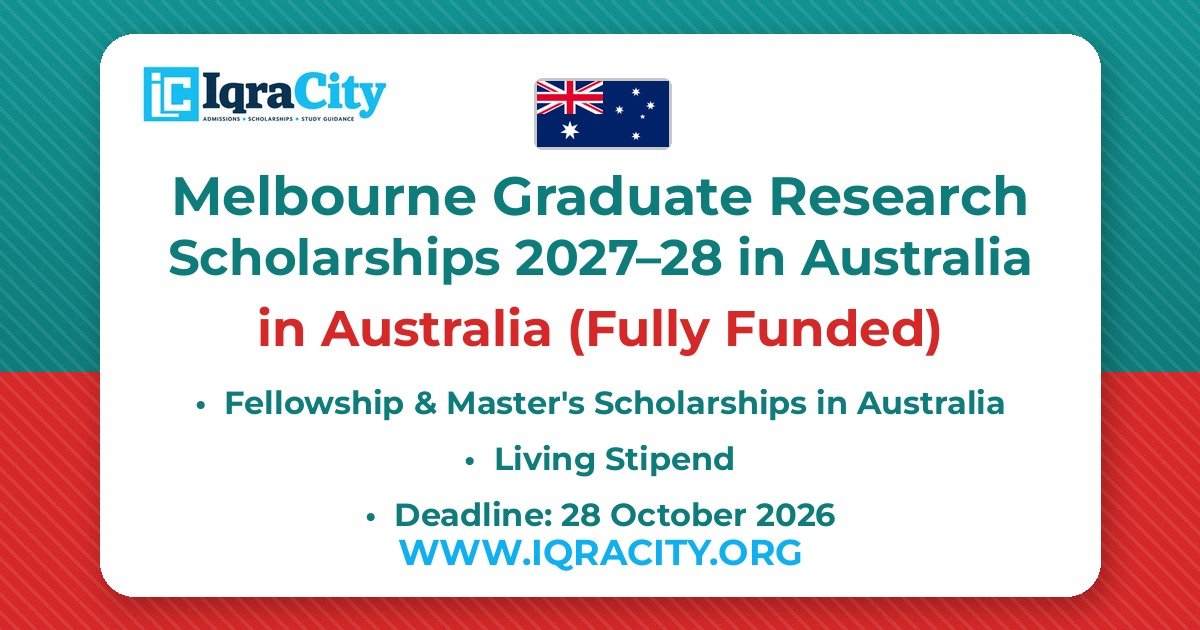
- Melbourne Graduate Research Scholarships 2027–28 in Australia (Fully Funded) · Australia • Fully Funded